


Why the Bears Must Stay Committed to the Run Game Against the New York Jets


The Chicago Bears enter Week 4 with one of the NFL’s most productive rushing attacks, but they could face a tougher test against the New York Jets.
Through three games, the Bears are averaging 184.3 rushing yards per game. That number is heavily influenced by the 291 rushing yards Chicago recorded in Week 1. Even so, the ground game remains a prominent part of the Bears' offense.
However, Chicago faces a tough test Sunday against the New York Jets.
The Bears Need to Stay Committed to the Run
The Jets currently rank seventh in the NFL in rushing yards allowed per game at 87.3. As a result, this sets up as a difficult challenge for the Bears' running backs.
Over the past two weeks, D'Andre Swift has rushed for 45 yards on 16 carries and 84 yards on 20 carries, while Kyle Monangai has rushed for 47 yards on 10 carries and 31 yards on 10 carries.
Both backs have had one rough outing, but Swift's was worse. Only being able to muster 45 yards on 16 carries is a bad day for a player with Swift's explosiveness. Sure, his lack of production came in a rainstorm against the Minnesota Vikings, but after signing his contract extension, he needs to consistently produce good games.
Monangai, on the other hand, needs more carries, no matter how you slice it. Against the Vikings, he averaged 4.7 yards per carry. With that success, it was fair to wonder whether he should have received more opportunities than Swift.
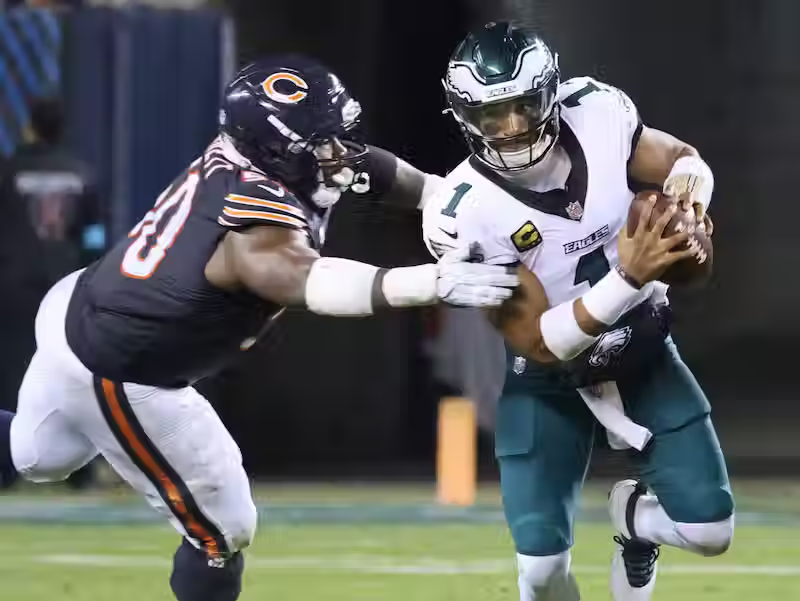
Despite averaging only 3.1 yards per carry against the Philadelphia Eagles, Monangai still deserved a few more carries. Sometimes, it takes a running back 12-15 carries to start wearing down a defense and creating bigger running lanes.
That could be especially important against the Jets. If Chicago abandons the run every time the Jets slow it down early, it could make things easier for New York's defense. The Bears need to stay committed to the ground game and give Swift and Monangai enough opportunities to eventually find their openings.
The Bears Need to Find the Explosive Runs
Chicago's run game recorded three explosive runs in Week 1. An explosive run is technically considered any run of more than 10 yards, although some don't consider a run explosive until it gains 10-15 yards.
Swift broke off a 28-yard touchdown and a 32-yard run, while Monangai had a 61-yard touchdown. Those plays helped turn the Bears' rushing attack into one of the biggest stories of the season's opening week.
In the two following games, the Bears' running backs combined for only two explosive runs. Both Monangai and Swift recorded one against the Vikings, although neither of those runs was more than 15 yards.
For Chicago to have more explosive runs like it did in Week 1, the offensive line, wide receivers, and tight ends need to do a better job of getting to the second level. Getting blockers to the second level can give Swift and Monangai more room to operate and turn short gains into explosive runs.
If they can do that, the Bears' running game will have a better chance of succeeding against a solid Jets run defense.
The Run Game Could Be Even More Important Sunday
Although the Bears proved they can have an effective passing attack without Caleb Williams last week, getting the run game going is a must.
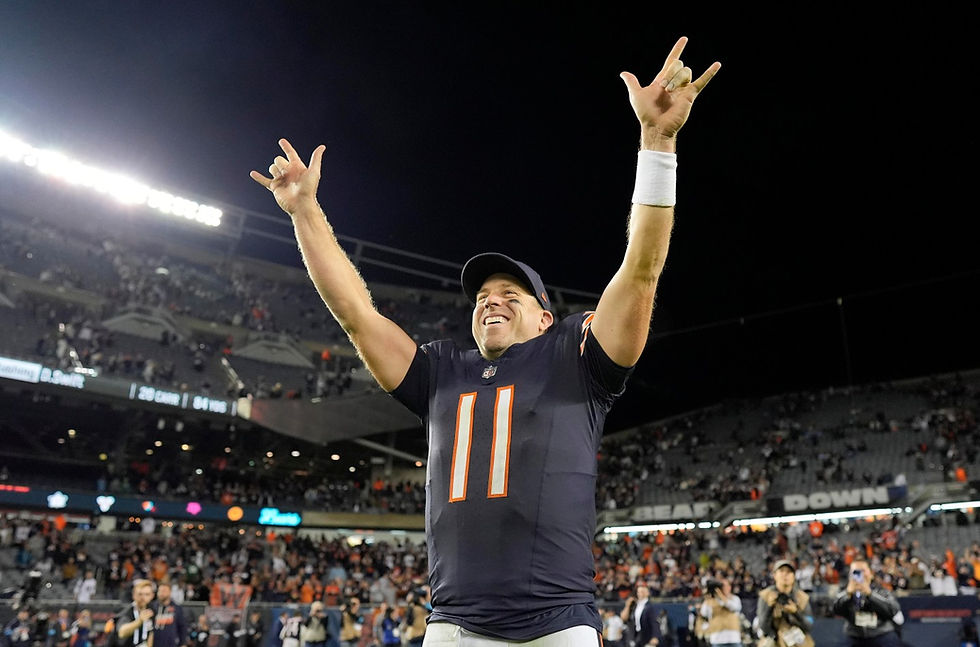
Whether Tyson Bagent or Case Keenum starts, a strong run game can take pressure off their shoulders. While Keenum proved he can handle the game being on him Monday night, a strong run game is still beneficial. The same goes for Bagent.
Sunday will be a good test for the Bears' run game. If they can finally establish it again, Bears fans will feel much better.

Comments