


The Chicago Bears' Run Game Completely Disappeared Against the Minnesota Vikings


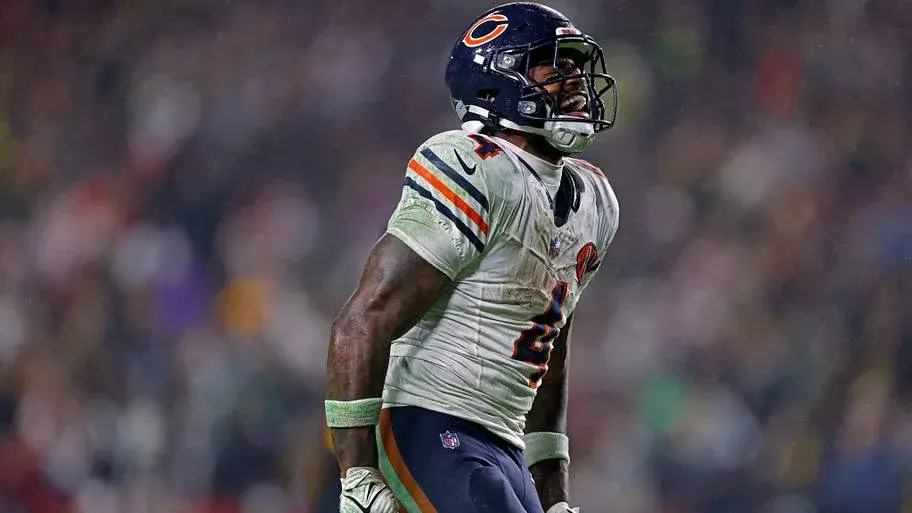
After Week 1, the Chicago Bears looked like they were going to have one of the best run games in the NFL. D'Andre Swift and Kyle Monangai combined for 224 rushing yards in Week 1. However, against the Minnesota Vikings, neither back found the same success.
The Chicago Bears' Running Game Was the Polar Opposite in Week 2
In Week 1, the Bears' running game was explosive. Chicago had three runs from its running backs that qualified as explosive runs, which means runs of over 10 yards. Swift recorded two: a 28-yard touchdown run and a 32-yard run. Monangai had a 61-yard touchdown run.
There are a lot of moving parts in a successful explosive run. The first is the offensive line. In Week 1, the Bears' offensive line and wide receivers were firing off the ball and opening up huge holes for the running backs. The other part is the running backs seeing the holes and making defenders miss.
Neither of those two things happened against Minnesota. Chicago got dominated in the trenches in both the passing and running game. Swift and Monangai combined for just 3.5 yards per carry against the Vikings.
Their two best runs of the day were an 11-yard run by Swift and a 15-yard run by Monangai on the first drive of the third quarter. After those plays, Chicago struggled to create much on the ground.
How the Ground Game Affected the Passing Game
Everyone knows that having a good ground game can help the passing game. When a team runs the ball well, it gives the defense multiple aspects of the offense to worry about. This is especially true in a Ben Johnson offense that is predicated on play action.
The fact that Brian Flores schemed up a great game plan to stop the Bears' rushing attack was important. Holding Swift and Monangai to just 3.5 yards per carry meant Chicago had longer third downs and had to rely more on the passing game.
The weather also played a factor in why the Bears needed to be successful on the ground. With it being wet and rainy, the ball was more difficult to handle, which made rushing success even more important.
The Vikings ultimately made Chicago too one-dimensional. The Bears were unable to consistently run the ball, which put more pressure on Williams and the passing game. Chicago finished with just three points and failed to score a touchdown.
The Bears Need to Get the Run Game Back on Track
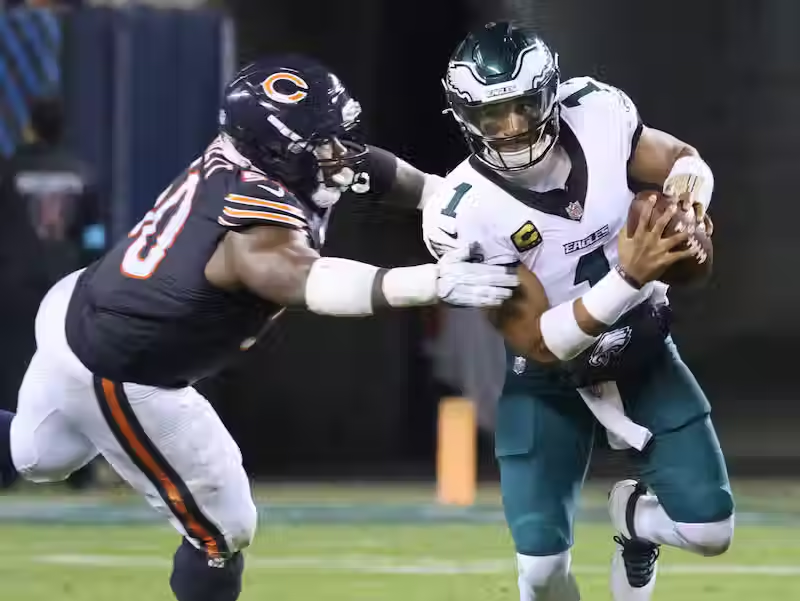
With two completely opposite performances on the ground, it is not easy to predict how the Bears' rushing attack will look next week. Chicago is facing the Philadelphia Eagles, though, and the matchup could give the running game a chance to bounce back.
Last year, the Bears rushed for 281 yards in their 24-15 victory over the Eagles. Although replicating that performance will be difficult, it is not unrealistic to expect a bounce-back from the running game.
With how much Ben Johnson emphasizes the run, he will likely spend this week figuring out what went wrong against Minnesota.
Bears fans should not be scared of the team's rushing outlook for the rest of the season. One poor performance should not erase what Chicago showed in Week 1.
The Vikings' performance did show what can happen when an opposing defense wins the battle in the trenches. The Bears do not need Swift and Monangai to combine for 224 yards every week. They just need the running game to be consistent enough that defenses cannot completely take it away.
If Chicago can get the run game back on track, it will give the offense another way to move the ball and take some pressure off Caleb Williams.
Comments